
Understanding the Kidney-Heart Connection
Very simply, if you have kidney disease, you are more likely to develop heart disease, and vice versa.
For example, damaged kidneys may have a harder time regulating blood pressure and balancing fluids in the body. When blood pressure rises or extra fluid builds up in the body, it can put extra strain on the heart. The heart has to work harder to pump blood.
On the other hand, if the heart isn’t working well, it can also affect blood flow to the kidneys. The kidneys also help produce a hormone that tells the body to make red blood cells, which carry oxygen throughout the body. If the kidneys aren’t working well, the body may make fewer red blood cells. This can lead to anemia and additional heart issues.
You may hear the term cardiovascular-kidney-metabolic (CKM) syndrome. It’s used to describe how the heart, kidneys, blood sugar, and body weight are all closely connected and affect one another. Over time, these conditions can increase the chance of serious heart and kidney problems.
How are they connected? The risk factors that can lead to heart, kidney and metabolic issues are very similar. CKM syndrome can progress over time. An early red flag is excess body weight, especially around the midsection. Later stages include heart disease with other CKM risk factors.
Ask your health care team about your body weight, blood pressure, cholesterol, blood sugar, and kidney function (GFR and UACR). Knowing these health measures can help you take steps to protect your heart and kidneys.Shared risk factors
Kidney disease and heart disease also share many of the same risk factors – risk factors are conditions or habits that increase the chance of developing the disease over time. Shared risk factors include:
- Older age
- High blood pressure (hypertension)
- High blood sugar (diabetes or prediabetes)
- Unhealthy lipids (fats), including high cholesterol
- Carrying extra weight, especially around your waist or midsection
- Being physically inactive or sitting for long periods of time
- Smoking or using tobacco
- Drinking too much alcohol
- Not eating healthy
- 1 in 3 adults with diabetes also have chronic kidney disease
- About half of people with heart disease also have chronic kidney disease
People who have heart failure or have had a heart attack often do worse if they also have kidney disease.
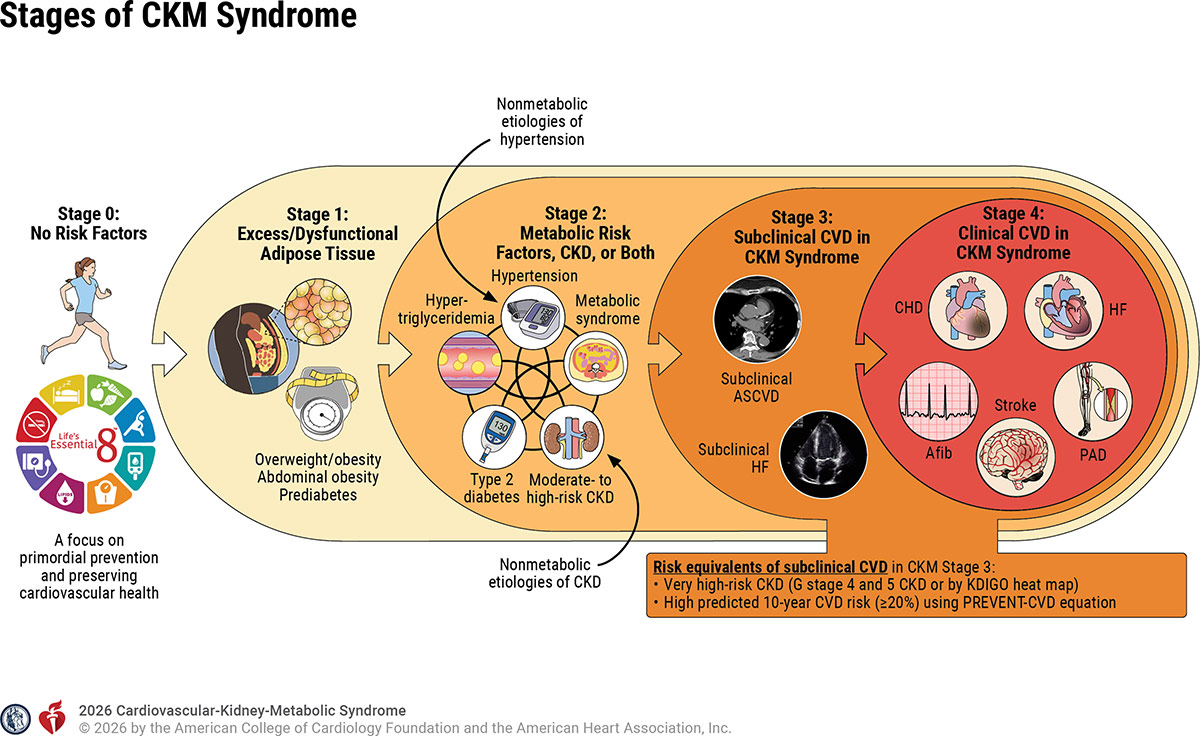
Read the 2026 Cardiovascular-Kidney-Metabolic Syndrome Guideline.
- Last Edited 06/09/2026